

CG Policy · 2025
In this section7 topics
Corporate Governance Policy
Has a Corporate Governance Policy
Yes
Policy Description
CP ALL Public Company Limited (“the Company”) operates under the spirit of good corporate governance, aiming for stable and sustainable growth while building trust among investors and all stakeholder groups. The Company prioritizes ethical business operations, transparency, accountability, and respect for shareholder rights, alongside social and environmental responsibility and the ability to adapt appropriately to changes in the business environment.
The Company has established a Corporate Governance Policy and guidelines for the Board of Directors, management, employees, corporate governance support units, and the internal audit office. These are regularly reviewed and updated to ensure they remain modern and consistent with relevant laws, regulatory requirements, and internationally recognized standards.
The Company’s corporate governance framework is rooted in good governance principles. It integrates the OECD Principles of Corporate Governance and the Corporate Governance Report (CGR) criteria by the Thai Institute of Directors (IOD) with the ASEAN Corporate Governance Scorecard and the Corporate Governance Code for listed companies set by the Securities and Exchange Commission (SEC) and the Stock Exchange of Thailand. This alignment supports the Company's specific business nature and ensures the Board's decision-making is based on transparency, accountability, and sustainable growth.
The Company’s corporate governance policy and guidelines cover the five categories of good corporate governance:
Rights of Shareholders
Equitable Treatment of Shareholders
Role of Stakeholders
Disclosure and Transparency
Responsibilities of the Board
In 2023, the IOD updated the CGR survey criteria by merging Categories 1 and 2 into a single category and increasing ESG disclosure requirements. Consequently, Category 3 was re-designated as Category 2 and renamed "Role of Stakeholders and Sustainable Business Development."
(The Company has disclosed the full details of its Corporate Governance Policy and related guidelines on the corporate website at www.cpall.co.th)
Policy Document Link
https://www.cpall.co.th/wp-content/uploads/2020/11/Corporate-Governance-Policy_Edited-2020.pdf
Policy & Practices — Board of Directors
Has Policy & Guidelines for the Board
Yes
Board Guidelines
| Guideline | Detail |
|---|---|
| Nomination of Directors | The Remuneration and Nominating Committee is responsible for recruiting, selecting, and screening individuals to serve as directors in place of those retiring by rotation or in other cases, before presenting them to the Board of Directors' meeting or the Shareholders' meeting for a resolution to appoint. Directors may be individuals proposed by minority shareholders according to the criteria set by the Company, or qualified experts with backgrounds and expertise from various professions, possessing leadership, broad vision, knowledge, capability, integrity, and ethics, as well as past work experience that can fulfill the requirements of the vacant position. Criteria and Methods for Nominating New Directors
|
| Determination of Director Remuneration | The Company has established a director remuneration policy based on the principles of transparency and linkage to operational performance. The Remuneration and Nominating Committee, chaired by an independent director, considers the criteria for director remuneration before presenting them to the Board of Directors for endorsement and subsequently to the Shareholders' Meeting for approval on an annual basis. The criteria for payment and forms of remuneration are determined fairly by benchmarking against the same industry, past performance, experience, duties, scope of roles and responsibilities, as well as business expansion, financial position, and the Company’s operating results. Furthermore, the criteria are reviewed and adjusted appropriately to ensure that remuneration remains at a competitive level to motivate and retain qualified directors in alignment with good corporate governance. |
| Independence of the Board of Directors from the Management | The Company clearly separates the roles, duties, and responsibilities between the Board of Directors and the Management. The Board of Directors is responsible for defining objectives, corporate goals, strategies, operating policies, as well as the allocation of key resources to achieve such objectives and goals, and monitoring, evaluating, and overseeing the performance reporting of the Company’s Management at the policy level. Meanwhile, the Company’s Management is responsible for managing various areas of work in accordance with the objectives, goals, and policies defined and approved by the Board. At the end of every year, the Company organizes a meeting among directors without the presence of Executive Directors or the Company’s Management to consider the Company’s management performance over the year and to collectively express opinions, suggestions, or observations beneficial to the Company. Subsequently, the meeting of the Executive Committee and the Management acknowledges such opinions, suggestions, and observations for further improving and rectifying the Company’s management as appropriate. Regarding the Company’s Management, they are delegated the authority and duties to operate in accordance with the objectives, goals, action plans, and annual budgets approved by the Board of Directors. The Chairman of the Executive Committee is delegated authority within the scope defined by the Board of Directors’ meeting. The Chief Executive Officer is delegated authority within the scope defined by the Chairman of the Executive Committee, and the Company’s executives are delegated authority and duties within the scope defined in the Company’s Delegation of Authority Manual. |
| Director Development | The Company provides appropriate training and development plans for current directors to enhance their knowledge and expertise, ensuring they remain current with changing external circumstances and to drive continuous sustainable development. Information is provided to directors regarding business operations, corporate governance, and sustainable development. Furthermore, the Company reviews any gaps in essential skills, knowledge, or expertise within the current Board of Directors according to the established Director Skill Matrix in order to appropriately select the necessary curricula for further director development.
|
| Board Performance Evaluation | The Company conducts performance evaluations and reviews the duties of the Board of Directors and Sub-Committees annually, at least once a year. This allows directors to review their performance, as well as problems and obstacles encountered during the past year, which enhances the Board's effectiveness by clarifying their responsibilities. Furthermore, it helps improve the relationship between the Board of Directors and the Management. The Board of Directors' performance evaluation is categorized into two types: the performance evaluation of the Board as a whole and self-assessment. Process and Criteria for Director Performance Evaluation The Company Secretary unit distributes the performance evaluation forms to all directors to evaluate the performance of the Board of Directors and the Sub-Committees on which they serve. These self-assessment forms are revised according to the guidelines of the Thai Institute of Directors (IOD). Once all completed evaluation forms are returned, the Company Secretary unit summarizes and presents the results to each Sub-Committee to consider their performance for the past year. Subsequently, the evaluation results of the Sub-Committees and the Board of Directors are reported to the Board of Directors for further consideration. The Performance Evaluation Form for the Board of Directors (As a Whole) consists of:
The Performance Evaluation Form for the Board of Directors (Individual/Self-Assessment) consists of:
The self-assessment forms for the Board of Directors (as a whole and individually) provide 5 levels of rating: 0 = Strongly disagree or no action taken on that matter 1 = Disagree or minimal action taken on that matter 2 = Agree or moderate action taken on that matter 3 = Mostly agree or good action taken on that matter 4 = Strongly agree or excellent action taken on that matter Additionally, space is provided for directors to provide further comments. |
| Corporate Governance of Subsidiaries and Associated Companies | The Board of Directors has established mechanisms and a framework for governing the policies and operations of subsidiaries, associate companies, and other businesses in which the Company has significant investments. This is maintained at an appropriate level for each entity to protect the Company’s investment interests as follows:
|
Policy & Practices — Shareholders and Stakeholders
Introduction
The Company prioritizes responsibility toward all stakeholder groups by considering the impacts of its business operations and establishing mechanisms for whistleblowing, compensation, or remediation in the event of rights violations. Furthermore, the Company has established anti-corruption policies and guidelines, along with appropriate disciplinary measures or actions for those who fail to comply with such policies and guidelines, in order to strengthen an organizational culture rooted in ethics, transparency, and sustainable social responsibility, while respecting the legal rights of both internal and external stakeholders. This is aimed at creating sustainable mutual benefits and promoting cooperation between the Company and its stakeholders to ensure corporate stability.
The Company also emphasizes conducting business with social responsibility, which encompasses fair business practices, respect for human rights, fair treatment of labor, safety, occupational health and the work environment, responsibility toward consumers, personal data protection and privacy, environmental conservation, participation in community or social development, anti-money laundering, and anti-corruption.
The Company has adopted the AA1000 SES standard as a framework for stakeholder engagement across various groups. Details are provided in the 2025 Sustainability Report and on the website at: https://www.cpall.co.th/sustain/social-dimension/stakeholder-engagement-management/
Has Policy & Guidelines for Shareholders and Stakeholders
Yes
Shareholder & Stakeholder Guidelines
| Guideline | Other — Please Specify | Detail | ||||||||||||||||||||||
|---|---|---|---|---|---|---|---|---|---|---|---|---|---|---|---|---|---|---|---|---|---|---|---|---|
| Shareholder | The Company prioritizes the equitable treatment of all groups of shareholders and protects their interests through measures to prevent the use of inside information and the management of conflicts of interest to prevent the improper seeking of personal gain. Furthermore, the Company focuses on the disclosure of factual, complete, and timely operational information to build confidence and meet the expectations of shareholders in being a truly ethical and socially responsible organization. Shareholders' Rights and Equitable Treatment of Shareholders Every shareholder is entitled to various fundamental rights both as an investor and as an owner of the Company through accepted and reliable methods and standards, such as the right to freely buy, sell, or transfer securities held; the protection of minority shareholders' rights to call an Extraordinary General Meeting of shareholders by one or several shareholders holding a combined total of not less than 10% of the total number of shares sold without requirements regarding the number of shareholders; the equitable receipt of profit sharing or dividends from the Company; participation in shareholder meetings or appointing proxies to attend and vote on their behalf; and participation in decisions on significant Company matters such as the election of directors and approval of significant transactions affecting the Company’s business direction. In this regard, every shareholder has voting rights according to the number of shares held, where each share is entitled to one vote and no shares have special privileges over those of other shareholders. In addition to the aforementioned fundamental rights, the Company has taken actions to encourage shareholders to exercise their rights at the shareholder meeting as follows: Pre-Meeting ProceduresThe Company invited individual or multiple shareholders holding a combined total of not less than 5% of the Company’s total voting shares to nominate individuals for director positions and propose agenda items in advance for the 2025 Annual General Meeting of Shareholders (AGM). Nomination and agenda proposal forms were provided to facilitate shareholders, with notifications made via the Company’s website and the Stock Exchange of Thailand (SET) system between September 17, 2024, and December 31, 2024. This action was taken 90 days prior to the end of the fiscal year to allow the Executive Committee and the Company Secretary to screen proposals before submission to the Board of Directors. The criteria for including shareholder-proposed agendas are clear and reasonable. Furthermore, the Board has a policy not to add unnecessary agenda items that were not notified in advance. During the specified period, no shareholders submitted any director nominations or agenda proposals in advance. The Company’s 2025 AGM was held on April 25, 2025, exclusively via electronic media (E-AGM). The Company utilized the "IR Plus AGM" application by Online Asset Company Limited, a system certified by the Electronic Transactions Development Agency (ETDA) (Certificate No. ETDA 67-001). The meeting was conducted in accordance with the Emergency Decree on Electronic Meetings B.E. 2563, the Notification of the Ministry of Digital Economy and Society Re: Standards for Electronic Meeting Security B.E. 2563 (including amendments), and the Company’s Data Privacy Policy under the Personal Data Protection Act B.E. 2562 to protect shareholders' personal data regarding collection, use, and disclosure. The Company prioritizes the protection of shareholders' rights equally. In the 2025 Annual General Meeting of Shareholders, the Company published the notice of the meeting along with supporting documents in both Thai and English on the Company's website (www.cpall.co.th) since March 19, 2025, which is more than 30 days in advance of the meeting date and exceeds the period required by law to ensure that shareholders have sufficient and complete time to study the information. In addition, the Company notified such publication through the Stock Exchange of Thailand’s system so that shareholders could access and download the documents in both languages simultaneously in advance, before proceeding to send the hard copy documents to shareholders by mail more than 21 days prior to the meeting date. The invitation notice contained accurate and sufficient information, with agenda items clearly defined and requests for approval separated for each matter, as detailed below:
To ensure maximum benefit from the meeting and assist the Board and Management in preparing clarifications, shareholders were invited to submit questions in advance of the meeting date via specified channels and criteria. To facilitate proxies with large volumes of documents, particularly financial institutions, mutual funds, or custodians, the Company coordinated and requested their cooperation in submitting documents in advance for verification prior to the meeting. The Company opened the E-AGM system for shareholders or proxies to verify their identity 14 days in advance of the meeting date. On the Day of the Shareholder MeetingThe Company opened the E-AGM system for shareholders or proxies to log in 2 hours prior to the meeting time. Before the meeting began, the Secretary reported the identity verification process via electronic media in accordance with the 2025 AGM manual and electronic voting via the IR Plus AGM application. Subsequently, the meeting was informed of the number and proportion of shareholders attending online and by proxy relative to the total number of sold shares, as well as the voting and counting procedures according to the Articles of Association. This followed the Articles of Association and Section 102 of the Public Limited Companies Act B.E. 2535 (including amendments), stating that every shareholder has votes equal to the number of shares held, with one share equaling one vote. A shareholder can vote only one way: "Approve," "Disapprove," or "Abstain." For each agenda, only those who "Disapprove" or "Abstain" were required to vote via the application; "Approve" votes were not required to be submitted manually. The system consolidated scores when an agenda was closed. The Chairman allowed sufficient time for voting before closing each item. In counting, "Disapprove," "Abstain," or invalid ballots were deducted from the total votes of eligible attendees, and the remainder was counted as "Approve." For proxy voting, the Company counted votes per the proxy forms submitted before consideration of the agenda. Once counting concluded, the Secretary announced the results as a percentage of the required resolution for each agenda. Regarding questions or comments, the Chairman allowed sufficient time for each agenda. Shareholders submitted questions via the application's question mark menu, which were queued chronologically. The Company reserved the right to screen questions to maintain time, answering remaining questions via registered email after the meeting. In the 2025 AGM, 100% of the directors attended. This included the Chairmen of all sub-committees (Audit, Sustainability and Corporate Governance, and Remuneration and Nomination), Independent Directors, the Chairman and Vice Chairman of the Executive Committee, the CEO, the CFO, and senior executives. The Company invited the auditor to provide information and answer questions. A representative from KPMG Phoomchai Audit Ltd., who was not the signing auditor, acted as an independent witness for the vote counting. Shareholders logging in after the meeting had commenced could still vote on agenda items currently under consideration that had not yet reached a resolution. The Company defined agenda items clearly. If an agenda had multiple items, the Chairman arranged for separate voting for each, as follows:
The Chairman conducted the meeting transparently, allowing shareholders to ask questions. The Secretary recorded all questions and answers. Each agenda specified the resolution and vote counts. The meeting was recorded and uploaded to the Company’s website. Technical support was available via the provided manual and contact numbers. The meeting included only normal agenda items, and no shareholders proposed additional items. The meeting proceeded according to the law, regulations, Articles of Association, and the specified order of the agenda. Procedures After the Shareholder MeetingThe Company disclosed meeting resolutions and voting results via the SET and Company website on the same day as the meeting. Minutes were prepared in Thai and English, submitted to the SET within 14 days, and posted on the website within 1 month. The minutes recorded:
Following the Annual General Meeting of Shareholders, the Company considered the questions, opinions, and suggestions from shareholders collected during the meeting to determine appropriate courses of action and to further improve the organization of future Annual General Meetings of Shareholders. Based on the 2025 Annual General Meeting of Shareholders quality assessment (AGM Checklist) conducted by the Thai Investors Association, the Company received a score of 98 points. | |||||||||||||||||||||||
| Employee | The Company recognizes the value of human resources as the sustainable heart of its business operations, both in the present and in the future, amidst all forms of change. To respond to the needs of customers, society, and sustainable growth, the Company prioritizes the recruitment, selection, and potential development of its employees. This includes caring for their well-being, both in times of happiness and hardship, and fostering engagement in alignment with the corporate philosophy: “We desire smiles from customers through happy employees.”
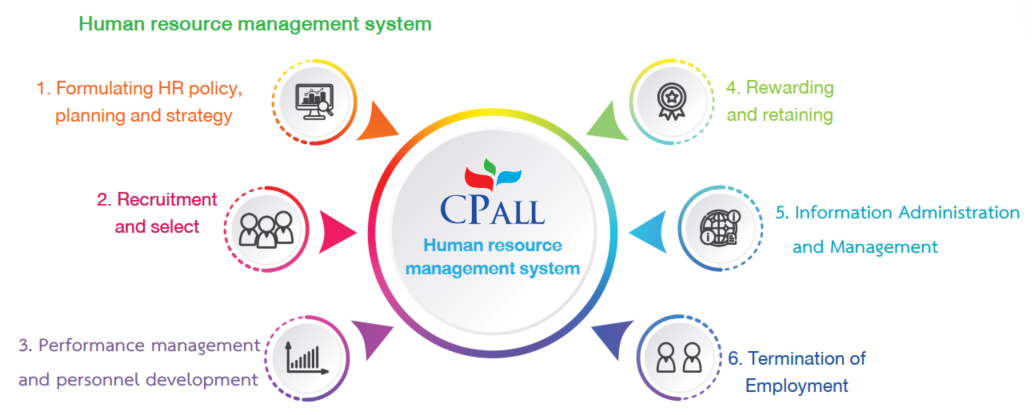
The Company has a human resource management process related to activities within the business value chain, ranging from HR policy formulation, planning, and strategy to recruitment and selection, performance management and personnel development, rewards and retention, information management, until the end of employment. This ensures that the business can operate to achieve its goals, while attracting and retaining talented individuals, maximizing employee potential and capabilities, and creating synergy to work toward shared goals happily. Labor and Human Rights Human Rights and Labor Practices Policy The Company has a Human Rights and Labor Practices Policy, which demonstrates awareness and responsibility in promoting compliance with the Universal Declaration of Human Rights. Policies and operational processes are defined to align with the United Nations Guiding Principles on Business and Human Rights (UNGPs). Furthermore, the Company is committed to upholding the principles of the United Nations Global Compact (UN Global Compact) regarding Human Rights (Principles 1 and 2) and Labor Practices (Principles 3-6), as well as international guidelines including the United Nations' Universal Declaration of Human Rights (UDHR) and the International Labour Organization's (ILO) Declaration on Fundamental Principles and Rights at Work. Human Rights and Labor Practices Guidelines To promote respect for human rights and labor practices throughout the organization and to ensure that all employees and all relevant stakeholder groups, including vulnerable groups—comprising women, children, indigenous peoples, migrant workers, third-party contracted labor, communities/local people, LGBTQI+, persons with disabilities, pregnant women, and the elderly—are treated, protected, and have their fundamental rights respected equally and fairly, the Company has established the following guidelines:
In this regard, the Company has disclosed its performance results concerning Human Rights Due Diligence (HRDD) within its business processes—such as Human Rights Risk Assessment (HRRA), Human Rights Impact Assessment (HRIA), risk mitigation and the establishment of preventive mechanisms, and the monitoring and review of human rights risks—along with statistics on complaints and human rights violations over the past year in the "Sustainability Report 2025." The Company's commitment to respecting human rights is clearly reflected through its key management policies, such as:
Diversity, Equity, and Inclusion Policy The Company recognizes the importance of organizational synergy, which arises from managing the differences among a diverse workforce operating across every province nationwide. This synergy is built on a shared foundation of "Harmony" culture, creating an environment that promotes happiness, efficiency, creativity, and innovation. It serves as a platform for employees to demonstrate their maximum potential, enhancing the corporate image and employee pride, which helps retain and attract talented and virtuous individuals to contribute to the organization's ongoing success. A key synergy driving business progress stems from having a diverse workforce capable of creating added value and innovation for the Company. Therefore, proper management of diversity and acceptance of differences enables the Company to attract and retain talented and virtuous individuals while maximizing employee potential. Diversity, Equity, and Inclusion (DEI) Guidelines
Diverse and Equitable Employment The Company remains committed to respecting the diverse differences of its employees and is dedicated to treating everyone equally without discrimination regarding race, nationality, skin color, religion, gender, sexual orientation, age, or disability, while upholding fundamental human rights. In the past year, the Company has implemented various projects for the elderly and underprivileged, such as the "Kind Adults Project" (Phu Yai Jai Dee) and projects for persons with disabilities, to support equal practices. This includes providing job arrangements suitable for persons with disabilities, allowing them to work within their local communities in accordance with the resolution to "Create Jobs, Create Careers for Persons with Disabilities," thereby distributing income to residential communities. The Company has fulfilled the legal requirements for hiring persons with disabilities, and the specific details regarding the number of disabled employees across various Company-led projects are disclosed in the "Sustainability Report 2025." Furthermore, the Company promotes equality between female and male employees within the organization by creating career advancement opportunities and providing equal compensation without discrimination. The Company also listens to different perspectives from gender diversity to drive business progress. Details concerning the ratio of compensation for female employees compared to male employees appear in the "Sustainability Report 2025." Employee Care Salary Increase Criteria, Performance Rating Comparison, and Performance-Based Compensation Reporting The Company focuses on creating a fair compensation management system aligned with business growth to motivate employees to perform to their full potential. There is a systematic process linking Corporate KPIs to individual targets through the responsibilities of assigned units at the group, office, department, and section levels, based on the following key criteria:
Employee Compensation and Benefits Consideration To ensure comprehensive employee care and promote organizational engagement, the Company has established systematic and transparent compensation and welfare policies as follows:
Furthermore, the Company prioritizes fair, transparent, and equal compensation management that is consistent with performance results. Rewards are considered for outstanding performers, and employees are supported in their appropriate career growth according to compensation and benefit policies and principles. The Company also encourages employees to be virtuous, capable, and ethical individuals who possess love for and pride in the organization. Personnel Development The Company prioritizes personnel development to ensure employees at all levels possess knowledge and skills aligned with corporate strategies, keeping pace with rapid business changes and adapting to the digital era. Diverse skill development is provided across professional groups through various formats, including Online, Offline, and Blended learning, to meet future skill requirements. For office-based employees, skills are elevated through courses such as Data Storytelling for Business, Advanced Digital Marketing Program, Data Cleansing and Transformation using Power Query and Power Pivot, Data Analytics with Microsoft Excel, and Process Improvement with Power Apps & Power Automate. This also includes an AI Literacy course to build awareness and provide a fundamental understanding of ethical AI usage, as well as the Enhance Modern Work: Generative AI for Business course to develop practical AI application skills. For distribution-line employees, the Company offers the Digital Operational Skills for a Sustainable Organization course for distribution center staff and the Data Management Elevation with Excel 365 course. Furthermore, the Company promotes and stimulates a learning atmosphere for digital and AI skills within the organization through various webinars, such as "How to Succeed with AI in the Workplace," "Smart Work with Copilot," "Professional Slide Presentation Techniques," and "Fast Insight Summarization with Excel 365." In addition, the Company has developed the skills of store-based personnel to support business strategies, including the "Elevating Personnel Capability in Managing Household Goods (ALL GROCER)" course, the "ALL SELECT Beverage Product and Service Standards" course, and "Elevating Safe Driving for 7-Delivery Services" for delivery staff. This also includes the "Elevating Store Performance Analysis Skills" course to enable rapid sales growth and support business expansion. Furthermore, the Company develops leadership skills to effectively manage teams and drive performance. In addition to the "New Leader Onboarding" course—designed to develop newly promoted employees at each level to be aware of their leadership roles, policies, regulations, operational authority, and corporate values and culture—there are courses to develop "People Manager Skills" for enhancing work and personnel management. These include courses such as "The Art of Persuasion for Collective Success," "Management and People Understanding Skills for Team Success," "Leadership and Team Management Development," "Team Management Psychology for Supervisors," "Basic Mentorship Program," "Creative Thinking Skills for Innovation," and "Analytical Thinking Skills for Work Management." Moreover, there is a "Talent Development Program" to groom high-potential employees as successors and promote cross-functional learning through project-based assignments and learning styles. To align with the corporate sustainability strategy, the Company also promotes ESG awareness through various courses and channels, such as safety and legal compliance modules, productivity improvement policy activities, and holistic development programs. The Company prioritizes pre-retirement preparation and encourages employees to engage in financial planning through courses like "Good Money Management for a Happy Retirement" and "Good Saving and Debt Clearance for a Joyful Life." Furthermore, energy and environmental awareness are cultivated among all employee levels through the "Energy and Environmental Management for Sustainability" course. Webinar sessions are organized to provide knowledge on Cybersecurity, Data Governance, and PDPA, alongside corporate governance advocacy media. ESG content learning and online knowledge assessments are conducted annually. Employee engagement is fostered through initiatives like the "Power Team Project," which helps employees understand the culture, goals, and corporate direction while instilling morality and positive thinking across the operations, distribution, office, and store partner sectors. Activities are also organized to build camaraderie and engagement within each business line. Data regarding the average training hours per employee per year or the number of trained employees per year is disclosed in the "Sustainability Report 2025." Additionally, the Company provides various beneficial projects for employees, such as health education and exercise activities in both onsite and online formats. In 2025, the Company campaigned for employee wellness through inter-departmental sports competitions in various categories, including table tennis, badminton, basketball, and volleyball. Fitness facilities are provided with professional trainers to ensure proper exercise techniques. Other benefits include health consulting services from eXta, club activities, and social contribution programs—such as the "Bringing the Temple to 7-Eleven" sessions by the Buddhist Wisdom Club and social activities by the Public Mind Club. Mental health support is also prioritized through "Health Check" online psychological assessments via Power App and "Knowledge Workshops" on mental health available both online and onsite.
To create sustainable happiness for employees, the Company maintains a policy focused on local recruitment to help create jobs and generate income for communities. Furthermore, the Company provides opportunities for employees to voluntarily request transfers back to their hometowns. This allows employees to work close to their homes and families, fostering love and bonding within the family unit, which is the core institution of the community and the nation. Strong Corporate Culture for Sustainable Growth The Company believes that a strong corporate culture will synergize everyone into an organizational force to move toward a single goal through "Harmony" teamwork, practiced since 2003. The Company campaigns for all executives and employees to perform with understanding, willingness, and determination according to the "5-7-11" principles, as encapsulated in the saying: "Combine similarities, harmonize differences, and create unity like musicians in the same orchestra," which consists of:
The Harmony culture, which everyone in the organization has collaboratively built over a long period, has been passed down to the new generation (New Gen). It has been adapted to be easy to understand, practical, short, and concise—suitable for modern communication—through the core of mutual care known as CCSF (Clear, Care, Share, Fun). This enables all employees to collectively create a force of happiness and success, with the following meanings:
The character "Klom-Kliao" (Unity) is used to represent the Company's employees, expressing friendliness, enthusiasm, reliability, and fun. The Company has also adopted the 6 Core Values of the Charoen Pokphand Group as its framework and operational philosophy, which consist of:
Building a Governance Organization for Sustainability Since 2017, Charoen Pokphand Group and the Company have prioritized building an organization that achieves sustainable growth. The Company has initiated various projects and implemented several related measures to drive and support these efforts. Examples include the Governance Project, the Anti-Corruption Project, and initiatives supporting Small and Medium Enterprises (SMEs) in joining Thailand’s Private Sector Collective Action against Corruption (CAC). This also includes the Human Rights Due Diligence (HRDD) project, as well as the establishment of mechanisms and channels for receiving complaints from both customers and employees through retail stores, postal mail, the Company’s website, and Call Centers, among others. Building People Through Education With stores distributed across every area of Thailand providing 24-hour convenience to all communities, recruitment and selection remain challenging tasks. To ensure the Company has virtuous and capable personnel ready to serve and bring smiles to customers, the Company has laid a foundation for human resource development by prioritizing education. This includes providing Work-based Education programs that emphasize learning alongside practical work experience for students at the Vocational Certificate, High Vocational Certificate, and Bachelor’s degree levels. These programs are offered through the Company’s established educational institutions as well as network institutions in both Bangkok and other provinces. Students receive knowledge and skills alternating with hands-on practice at retail stores and corporate offices. This dual approach of learning and working enables the Company to develop a new generation of skilled professionals, particularly in the retail business, who are ready to join the Company's workforce upon graduation. Employee Welfare The Company maintains a policy focused on the quality of work life and ensures that all employees are treated equally. Various welfare programs have been established, including:
Additionally, the Company has established guidelines to promote savings and financial security for employees through the following projects:
Furthermore, the Company prioritizes maintaining a work environment that ensures the safety of employees' lives and property. This is achieved by establishing Safety Committees to oversee and provide training for various incidents, implementing fire and hazard prevention systems, and organizing safety activities along with the "7S" methodology. Detailed information regarding employee care, accident statistics, lost time injury rates, occupational illness rates, and measures for mitigating risks related to safety, occupational health, and the work environment is disclosed in the "Sustainability Report 2025." | |||||||||||||||||||||||
| Customer | The Company prioritizes and pays close attention to customers with responsibility to build confidence and deliver excellent experiences through value chain management. By adhering to the 'SAVEQC' principle, the Company guarantees the quality, safety, and value of products and services that respond to diverse needs. The Company emphasizes continuous innovation development to elevate product and service standards, while implementing technology to increase convenience via online channels alongside strict personal data security systems. Furthermore, the Company focuses on treating customers with transparency and fairness in accordance with business ethics. This includes establishing processes for listening to opinions and conducting satisfaction surveys twice a year (the results of the customer satisfaction surveys appear on the Company's website under the topic "Sustainability - Social Dimension") to analyze the survey results and identify significant issues for organizational development in alignment with long-term customer expectations. Various and easily accessible communication and complaint channels have also been provided, such as through branch stores, mail, the Company's website and social media, and the Customer Relations Center (Call Center), among others, to maintain sustainable relationships and create shared value as a key stakeholder of the Company. The Company's Guidelines for Treating Customers
Protection of Customers' Personal Data The Company recognizes the importance of customer data, the breach of which could cause damage to the data owner, as access, collection, use, and disclosure of personal data can currently be performed easily, conveniently, and rapidly. Consequently, the Company has reviewed and announced a Personal Data Protection Policy (Data Privacy) to serve as a principle for protecting customers' personal data in accordance with the Constitution of the Kingdom of Thailand and the Universal Declaration of Human Rights. This also aims to support and respect the protection of human rights as internationally proclaimed under the principles of the United Nations Global Compact (UN Global Compact), as well as laws concerning personal data protection. Since 2018, the Company has monitored and audited the use of customers' personal data for purposes other than the primary purpose and has taken actions to elevate personal data protection to meet international standards. In 2025, there were no findings of customers' personal data being used for other purposes. (Details of the Personal Data Protection Policy and actions taken for the protection of customers' personal data appear in the "Sustainability Report 2025" and on the Company's website at www.cpall.co.th/sustain) | |||||||||||||||||||||||
| Business competitor | The Company is committed to conducting its business within the framework of fair and professional competition rules, operating with openness and transparency, and refraining from creating unfair competitive advantages. In this regard, the Company prioritizes respect for the intellectual property rights of competitors by not infringing upon copyrights, patents, or trademarks. The Company is determined to operate its business in compliance with the principles of trade competition laws and relevant announcements from the Trade Competition Commission. It emphasizes that business operations involving competitors, manufacturers, business partners, suppliers, other business operators, and customers must derive from a free and fair competitive economic system, as well as trade practices that create benefits for consumers and society as a whole. The Company has no policy to seek trade secrets of competitors through unlawful means or any fraudulent acts that would negatively impact industrial relationships. Additionally, the Company has provided two-way communication channels to allow stakeholders and concerned parties the opportunity to express opinions and file complaints in cases where they experience unfair treatment from the Company’s actions. Details and guidelines regarding such procedures are disclosed on the Company’s website under the heading “Anti-Corruption Policy.” In the 2025 fiscal year, the Company had no disputes with trade competitors and entered into no agreements with competitors or other operators that would constitute a monopoly or reduce market competition. | |||||||||||||||||||||||
| Business partner | Suppliers are a vital link in business operations, and the Company believes that sustainable success must be built on the foundation of responsible business conduct throughout the supply chain. The Company employs a fair supplier selection process and has established a Sustainable Procurement Policy and Supplier Code of Conduct and Guideline. These define the criteria for sourcing and selecting potential suppliers in compliance with relevant laws and regulations, as well as environmental considerations. For instance, the procurement of equipment for installation in 7-Eleven stores follows Green Procurement principles. Furthermore, there are guidelines to promote, support, and develop the potential of suppliers under a responsible procurement and supply chain management process to respond to the ever-changing needs and expectations of customers, communities, and society. This also serves to enhance competitive capabilities and foster long-term mutual growth, while providing opportunities for the Company and its business partners to participate in improving and developing society and the environment as a whole. The Supplier Code of Conduct covers topics such as business ethics, quality and standards of products and services, respect for human rights, fair labor practices, occupational health, safety and working environment, and responsibility toward communities, society, and the environment. Additionally, the Company promotes distribution channels for agricultural produce and organic products, taking into account the appropriate distance from cultivation areas to distribution points to maintain freshness during transport to consumers, as well as developing work processes that reduce environmental impacts. Moreover, the Company prioritizes product traceability to promote the sustainable use of raw materials through various projects. The Company provides communication channels with suppliers through the Supplier Relations Center at Tel. 0–2826–7771. It also organizes sustainability seminars to share knowledge with all groups of suppliers and announce corporate policy directions. There are initiatives to promote and develop competitive potential, growth, and increased distribution channels; supplier visits to listen to opinions or complaints; and collaborative innovation projects. Supplier performance evaluations are conducted alongside consulting and potential development. This includes the annual implementation of Joint Business Plans with key suppliers to define paths for continuous and sustainable business growth, reflecting responsible business conduct under the ESG concept. The Company also supports and elevates supplier standards to help protect the environment, prevent various types of pollution, and reduce impacts on communities through projects such as the Environmentally Friendly Packaging Development Project, the Energy Efficiency Improvement Project, the Renewable Energy Proportion Increase Project, and the Electric Vehicle (EV) Adoption in Transportation Project, among others. The Company also allocates sales channels for suppliers through the "CP ALL Market" project for promoting community enterprises and small businesses, the Direct Sourcing from Farmers project, and the Community Products project. In addition, the Company has issued trade policies related to trade competition, details of which appear on the Company’s website under the “Sustainability” section. This includes trade guidelines and policies concerning competition, Good Trade Practices in accordance with the Trade Competition Act B.E. 2560 (2017), and the policy to conduct business under a free and fair competitive economic system, as well as trade practices that benefit consumers and society as a whole. This ensures that every supplier of the Company receives equal and fair treatment. The Company clarifies and ensures that suppliers respect human rights and treat their labor fairly through initiatives such as the Cargo Transportation Safety Management Project, the In-depth Technical Support Program to enhance occupational health and safety management potential for transport contractors, and the promotion of living wage assessments through the Supplier Risk Assessment program. Furthermore, the Company collaborates with the Thai Private Sector Collective Action Against Corruption (CAC) to organize training and encourage the Company’s SME suppliers to declare their intention to join the CAC. The Company also conducts sustainability risk assessments and promotes supplier potential to foster sustainable mutual business development. Additionally, the Company facilitates transaction bidding via the internet or e-Auction. | |||||||||||||||||||||||
| Creditor | The Company has a policy to treat all creditors with equality, fairness, and transparency, strictly adhering to all terms and conditions of agreements. Furthermore, to maintain creditor confidence, the Company prioritizes capital management to ensure an appropriate financial structure, maintaining the stability and strength of its financial position and ensuring sufficient liquidity for debt repayment. The Company communicates regularly with creditors regarding its business status and is committed to maintaining sustainable relationships with all creditors. The Company's policies and guidelines for treating creditors are as follows:
| |||||||||||||||||||||||
| Government agency | The Company conducts its business in strict compliance with relevant rules, regulations, and laws. A Compliance Unit has been established to consistently monitor and audit operations to ensure they are correct and in accordance with the criteria of regulatory agencies. Furthermore, the Company adheres to guidelines under the Anti-Corruption Policy and related practices when coordinating with government agencies, maintaining appropriate, transparent, and auditable relationships. The Company also cooperates in government projects focused on sustainable economic and social development, such as serving on committees and participating in policy-level discussions. This includes supporting the "Circular Economy" project in collaboration with the National Environment Board to drive maximum resource utilization in line with the Company’s sustainability strategy. In the past year, the Company has no record of legal violations and has not been subject to any penalties by regulatory agencies. | |||||||||||||||||||||||
| Community and society | The Company operates its business under the motto of being "Your Close Friend, Always Near You," focusing on being a good neighbor and a reliable support for the community in every situation. This commitment has been elevated into the "4 Creations" sustainability strategy, which includes: Creating People, Creating Careers, Creating Jobs, and Creating Secure Communities, in order to provide tangible benefits and happiness to all communities. Under this strategy, the Company considers it a vital mission to conduct business with responsibility toward society and the nation, adhering to the principle of Integrity. This involves conducting business ethically, providing fairness to all parties, and caring for the environment, with the aim of developing the community's quality of life and business growth side by side sustainably. The Company aims to create shared value for the nation, the people, and the organization. Consequently, it has established a Social Responsibility Policy and Social Value Creation Guidelines, focusing on promoting careers and generating income for Small and Medium Enterprises (SMEs), farmers, and vulnerable groups. Short-term and long-term key performance indicators (KPIs) have been set, along with more intensive support programs through the "3 Givings" strategy: "Giving Channels, Giving Knowledge, and Giving Quality of Life." This also includes aiming to enhance awareness to gain acceptance from the community and society, as well as developing an integrated small enterprise management system throughout the entire business partnership cycle. Furthermore, the Company operates and supports the creation of shared value between the organization and the community, such as through employment, procurement, support for community products, and providing community relief to build good relationships with the communities where the Company operates. In addition, with the Company's determination to be part of the effort to reduce greenhouse gas emissions and energy consumption, it implements projects under the "7 Go Green Strategy." This strategy aims to create environmental sustainability for the community, society, and the nation, focusing on the outcome of reducing greenhouse gas emissions through cooperation with the community and society. Details of environmental operations and driving business for sustainability appear in Part 1: Business Operations and Performance, Section 3: Driving Business for Sustainability, and the Sustainability Report 2025. | |||||||||||||||||||||||
| Other guidelines regarding shareholders and stakeholders | the intellectual property | The Company is committed to conducting its business without infringing upon the intellectual property or copyrights of others. This is established as a clear policy and guideline in the "Business Ethics and Code of Conduct" for directors, executives, and employees at all levels to strictly adhere to. This covers the use of software, academic works, and all forms of intellectual property in a legally correct manner. Furthermore, the Company has established a systematic oversight mechanism, ranging from communication to ensure understanding and regular internal audits of usage, to the definition of clear disciplinary penalties in the event of violations. |
Code of Conduct
Has a Business Code of Conduct
Yes
Code of Conduct Description
The Business Ethics and Code of Conduct prepared by the Company is reviewed and updated annually to ensure alignment with changes and current events. It contains principles regarding ethics and integrity to ensure that directors, executives, and employees perform their duties with honesty, comply with laws and regulations, adhere to the rule of law, maintain transparency, and uphold justice and morality. Importance is placed on customers, responsibility to society, community, and the environment, remaining politically neutral, and considering all stakeholder groups, including legal individual rights. This includes respect for human rights, anti-corruption, anti-money laundering, not giving or receiving excessive benefits, and zero involvement in soliciting, receiving, or paying bribes. It also covers avoiding conflicts of interest, safeguarding assets, prohibiting the misuse of internal information, avoiding intellectual property or copyright infringement, and adhering to trade competition and related practices. The Company disseminates this manual to all directors, executives, and employees, providing training to ensure correct operational understanding along with knowledge testing. Communication is conducted to create awareness and cultivate compliance, with various activities organized to encourage executives and employees to participate in promoting the Company's Corporate Governance "incantations" (Core Values), resulting in quality, moral, transparent, and verifiable operations.
Furthermore, to promote innovation and conduct business with social and environmental responsibility, as reflected in the Company's action plans, and to ensure that all parties operate in alignment with the objectives, primary goals, and corporate strategic plans, the Company has established a Sustainability Policy and Sustainability Guidelines. This includes defining a framework and sustainable development goals, with key sustainability issues consisting of corporate governance, human rights and labor practices, leadership and human resource development, stakeholder engagement, anti-corruption, social value, health and well-being, education, innovation management, safety/occupational health and working environment management, climate change management, water resource management, ecosystem and biodiversity protection, responsible supply chain management, and conflict management and community acceptance.
Under the authority and responsibility of the Sustainability and Corporate Governance Committee appointed by the Board of Directors, the Sustainability and Corporate Governance Committee has appointed the Corporate Governance Sub-committee and the Sustainability Development Sub-committee as key mechanisms to drive operations. This ensures that all executives and employees of the Company and its subsidiaries are correctly and fully informed and seriously adhere to business ethics and corporate sustainability development. This is considered part of the organizational culture, which senior management has defined as Corporate Governance "incantations" (Core Values) serving as a strategy and organizational goal. Both sub-committees are required to report their performance results to the Sustainability and Corporate Governance Committee for consideration on a quarterly basis.
Code of Conduct Link
www.cpall.co.th/wp-content/uploads/2020/07/Code-of-ethics_Eng-Word.pdf
Code of Conduct Practices
| Guideline | Detail | Document Link |
|---|---|---|
| Prevention of Misuse of Inside Information | The Company prioritizes the prevention of actions that may lead to conflicts of interest. Directors, executives, employees, families, and close associates must not engage in any transactions that conflict with the Company's interests, whether directly or indirectly, and whether acting individually or in conjunction with family members or close associates. To avoid such improprieties, the Company has implemented the following measures:
| |
| Anti-corruption | The Company is committed to conducting business with transparency, adhering to correctness and ethics under the principles of good corporate governance, by establishing anti-corruption in all forms as the core of the corporate culture to build confidence among all stakeholders in accordance with international standards. 1. Policies and Declaration of Intent
2. Governance and Risk Assessment
3. Communication and Awareness Building
| |
| Whistleblowing and Protection of Whistleblowers | The Company has issued the Whistleblowing Policy, as appeared on the Company’s website. Whistleblowing Channels: The Company provides accessible and independent whistleblowing channels for employees and external parties to report suspected incidents of corruption or ethical misconduct. Whistleblower Protection Mechanism: There are measures to keep information confidential and protect whistleblowers from harassment or unfair treatment to ensure safety and a fair investigation process. Whistleblowing Channels 1. Via Email, by sending to one of the following whistleblower recipients: - Audit Committee : AuditCommittee@cpall.co.th - Sustainability and Corporate Governance Committee : CGcommittee@cpall.co.th - Board of Directors : BOD@cpall.co.th 2. Via Mail, by addressing the envelope to: Internal Audit Department, CP ALL Public Company Limited 119 Tara Sathorn Building, 16th Floor, Soi Sathorn 5, South Sathorn Road, Thung Maha Mek, Sathorn, Bangkok 10120 3. Via Information Center Telephone 02-071-2770, 02-826-7744 Fax 02-071-8623 4. Via the Company’s Online Media - Website: www.cpall.co.th/whistleblowing - Facebook: www.facebook.com/CPALL7 (Inbox) 5. Via the Application: CP ALL Connect > Portal > Whistleblowing (Internal Use Only) The Company prioritizes the confidentiality of complainants or whistleblowers and keeps complaint information accessible only to assigned and relevant individuals to prevent any impact from reporting. Reports regarding corruption, business ethics violations, legal or regulatory breaches, or inappropriate actions by directors, executives, and employees of the Company and its subsidiaries will be investigated to find the facts in every case, followed by disciplinary action against offenders and the determination of corrective measures to prevent recurrence. Intentional Reporting of False Information to Cause Damage to Others In the event the Company proves that the information reported is false, with the intention to distort facts or defame others, it shall be considered that the person reporting such information has violated the Company’s Code of Ethics. Disciplinary actions shall be in accordance with the Company’s rules and regulations and/or relevant legal provisions. | |
| Preventing the Misuse of Inside Information | The Company prioritizes the issue of using internal information for personal gain. This is established in the Corporate Governance Policy and the Code of Business Ethics and Code of Conduct, prohibiting the use of internal information that one has become aware of to potentially benefit from such information before it is disclosed to the general public. A policy for the prevention of insider trading and guidelines for directors, executives, and employees regarding the acquisition or disposal of the Company’s securities have been established as measures to prevent insider trading by relevant persons, which includes directors, executives, and employees in departments related to the Company’s information, as well as their spouses and minor children or adopted children, as follows: When acquiring or disposing of the Company’s securities, directors and executives must provide notice at least 1 business day prior to the transaction by completing the “Pre-acquisition/Disposal of Securities Notification Form (Pre-59 Form)” and submitting it to the Company Secretary Office as evidence before the transaction. A summary of Pre-59 reports will be presented to the Board of Directors’ meeting annually. Subsequently, once the acquisition or disposal of the Company’s securities is completed, a report on changes in securities holding (Form 59) must be prepared electronically and submitted to the SEC Office within 3 business days from the transaction date. This enables the SEC to disclose such changes through its website, allowing investors to monitor the movement of securities holdings of individuals in positions or statuses that may have access to the Company’s internal information and could potentially benefit from such information before it is generally disclosed.
| |
| Prevention of money laundering | The Company recognizes the importance and potential impacts of involvement in transactions related to money laundering and is committed to preventing the Company from becoming a channel for money laundering. In this regard, the Company maintains and oversees accounts or assets in compliance with the law to protect the business from involvement in any illegal activities, whether intentional or unintentional. Anti-money laundering guidelines are as follows:
| |
| Giving or receiving gifts, entertainment, or business entertainment | In addition to the established anti-fraud and anti-corruption measures, the Company has specified guidelines for giving/receiving gifts, tokens of appreciation, and hospitality as operational practices. It is specified that providing or receiving benefits or gifts is permissible according to traditions and customs in a transparent manner, provided they do not affect the Company's operations and business decisions. In this regard, giving or receiving benefits or gifts must be done on behalf of the Company only, with a value not exceeding 3,000 Baht. Should the value of such benefits or gifts exceed 3,000 Baht, it must be reported in writing to the respective supervisor, and the benefit or gift must be surrendered to the Company. This also applies to cases where personnel act as Company representatives at business partners' social events or travel for off-site training/study tours and receive benefits or gifts valued over 3,000 Baht, whether through lucky draws, raffles, or as souvenirs. For hospitality, a management member at the level of Assistant General Manager or above must participate, and it must be held at an appropriate venue. Every transaction must have clear evidence, such as the names of the hosted individuals and receipts, to enable the Accounting Department to verify accuracy and the Internal Audit Department to inspect the hospitality process to ensure efficiency, effectiveness, and appropriate internal controls. | |
| Compliance with laws, rules and regulations | The Company prioritizes compliance with relevant laws, rules, and regulations. Company personnel must study, understand, and strictly comply with laws, orders, announcements, Company regulations, and various meeting resolutions. Furthermore, any actions that may negatively impact the Company’s business reputation must be avoided. Company personnel must also strictly comply with the Company’s announcements regarding computer-related offenses. The Board of Directors has issued a policy announcement regarding the performance of duties in compliance with laws and regulations for the benefit of the Company. It requires all directors, executives, employees, and relevant parties to perform their duties with responsibility, due care, and integrity for the maximum benefit of the organization. The policy emphasizes the importance of decision-making based on sufficient information without any personal interest, and prohibits any actions that conflict with the Company's interests, such as transactions not complying with regulations or the use of the Company's information and assets for personal gain. Additionally, it stipulates that every operational step must strictly adhere to the law, objectives, Company regulations, and various meeting resolutions. If risks are identified or there are doubts that may lead to legal or ethical violations, operations must be delayed for clear verification and immediate consultation with experts. In this regard, it is emphasized that supervision must be carried out through the chain of command, with inspection measures in place to ensure that the operations of all units remain consistently efficient and correct according to corporate governance principles. | |
| Use and maintenance of data and assets | The Company has specified the use and protection of information and assets in the Code of Business Ethics and Code of Conduct, requiring employees to safeguard and utilize Company assets for the maximum benefit of the Company. Assets must not be misused for personal gain or for the benefit of others, and intellectual property rights must not be infringed. Regarding customer data, the Company has issued a Data Privacy & Security Policy that specifies strict information security measures and the protection of customer information, such as access control, password management, and channels for reporting irregularities to ensure timely prevention and resolution of issues. | |
| Anti-competitive | The Company conducts its business strictly under corporate governance principles and legal frameworks, adhering to trade competition laws and relevant announcements from the Trade Competition Commission. Consequently, the "Trade Competition Policy" has been established to ensure that employees comply with the law and to prevent actions that constitute unfair competition. In particular, the wholesale and retail business operations must strictly comply with the Trade Competition Commission's announcement regarding guidelines for considering unfair trade practices between wholesale/retail businesses and producers or suppliers. In the event of a business merger, there is a process to evaluate the merger in accordance with trade competition laws, and permission must be obtained from regulatory authorities (such as the TCCT). The Company does not abuse its dominant market power through the sharing of marketing information between the Company and its subsidiaries to ensure other producers are not disadvantaged. The Company encourages personnel to study, undergo training, and gain an understanding of trade competition legal principles and relevant Trade Competition Commission announcements. The Company prioritizes conducting business related to competitors, producers, business partners, suppliers, other business operators, and customers through a free and fair competitive economic system, as well as trade practices that create benefits for consumers and society as a whole. | |
| Cyber security | The Company prioritizes cybersecurity risks, with the Board of Directors and the Risk Management Committee supervising appropriate information technology risk management that is comprehensive and aligned with international practices, such as the NIST Cybersecurity Framework. This aims to enhance efficiency throughout the business value chain securely, adhering to the principles of Confidentiality, Integrity, and Availability (CIA). Furthermore, policies have been established in accordance with key laws such as the PDPA, and the Company has achieved high-level international certifications, including ISO/IEC 27001, ISO/IEC 27701, and PCI/DSS. The Company also emphasizes individual user account access control alongside proactive risk management. The Company provides for cybersecurity risk assessments and reviews security measures once a year, while continuously installing security system technologies according to the Cyber Security Roadmap. Information technology and cybersecurity technologies are appropriately applied to elevate efficiency across the business value chain securely, based on the CIA principles under the supervision of the IT Governance Committee and the Enterprise Risk Management (ERM) Committee through the risk management working group (Risk Champion & Risk Manager). The Digital Governance unit is responsible for managing and assessing information technology risks and implementing risk mitigation actions. In addition, the Company provides cybersecurity training and awareness programs for employees at all levels and conducts Cyber Security Drills Tests every quarter to strengthen the organization's security culture. | https://www.cpall.co.th/wp-content/uploads/2021/05/Information-Technology-Security-Policy-en.pdf |
| Environmental management | The Company is committed to sustainable business operations based on environmental responsibility, recognizing and prioritizing the reduction of environmental impacts resulting from business activities, products, and services. Consequently, a policy has been established to promote the development of production processes and foster innovation to mitigate potential impacts. Furthermore, targets have been set for the efficient use of natural resources and the reduction of the consumption of limited natural energy. This includes preparing various plans and measures to participate in addressing the challenges of climate change, campaigning to reduce deforestation, promoting efficient water management, and protecting ecosystems and biodiversity. The Company recognizes its responsibility towards environmental issues and has therefore established business policies that comply with environmental laws, regulations, international standards, and voluntary sustainability standards. This is to ensure continuous development in alignment with the United Nations Sustainable Development Goals (UN SDGs). As a participant of the United Nations Global Compact (UN Global Compact) and the ASEAN CG Scorecard, the Company emphasizes the transparent disclosure of resource management and environmental outcomes to create long-term value and mitigate potential impacts on stakeholders sustainably. The Company is committed to upholding Environmental Principles 7, 8, and 9 as follows: Principle 7 – Support a precautionary approach to environmental challenges. Principle 8 – Undertake initiatives to promote greater environmental responsibility. Principle 9 – Encourage the development and diffusion of environmentally friendly technologies. | |
| Human rights | Respect for human rights is a fundamental cornerstone of business operations throughout the value chain. The Company emphasizes treating employees, business partners, and all stakeholder groups in accordance with international standards and the United Nations Guiding Principles on Business and Human Rights (UNGPs). Furthermore, the Human Rights and Labor Practices Policy, as well as the Human Rights Risk and Impact Assessment Manual, have been published on the Company’s website. The Company prescribes operations in accordance with the Human Rights and Labor Practices Policy, covering all business operation areas, including business partners and alliances. This is consistent with the United Nations Guiding Principles on Business and Human Rights (UNGPs), the International Labour Organization's (ILO) Declaration on Fundamental Principles and Rights at Work, and the labor laws of each country where the Company operates, covering key human rights issues. In this regard, the Company conducts a process to assess key issues, impacts, and human rights risks every 3 years across all business activity areas of the organization. This covers the analysis of work processes, particularly in high-risk units, while establishing preventive and mitigation measures for high-risk issues through an integrated human rights due diligence process. The Company's overall actions include:
| |
| Occupational health and safety | The Company prioritizes occupational health, safety, and the working environment during the performance of duties by employees and contractors operating within the Company's premises through the establishment of the Occupational Health, Safety, and Working Environment Policy. This includes managing operational areas and the environment to ensure safety in strict accordance with international standards and relevant laws, aiming to become an accident-free organization by 2030. The Company has established the Occupational Health, Safety, and Working Environment Policy Committee for the Marketing and Distribution Business Group, which is responsible for determining policies, operational guidelines, and occupational health and safety system development plans. Additionally, the Safety, Health, and Environment Management Effectiveness Assessment Committee has been established in collaboration with Charoen Pokphand Group to set up a committee for preventing serious accidents and mitigating potential impacts. Annual workshops for the Occupational Health, Safety, and Working Environment Committee (OHSC) are organized, and management standards are elevated to international levels to reduce environmental impacts both within and outside the organization, ensuring that all employees work in a safe environment. |
Promoting Compliance with the Code of Conduct
Promotes Compliance by Directors, Executives and Employees
Yes
Description
Processes for Promoting Compliance with the Business Code of Conduct among Directors, Executives, and Employees
The Board of Directors and senior executives act as role models in their conduct and ensure that a written acknowledgment of the Business Code of Conduct is signed upon commencement of employment with the Company.
Providing On-Boarding training for 100% of new employees and Store Partners to ensure that employees at all levels recognize, understand, and can operate in alignment with Corporate Governance, Business Ethics, and the Code of Conduct.
Providing training on the Business Ethics and Code of Conduct manual for 100% of executives and employees at all levels, including annual assessments of business ethics understanding to review knowledge, comprehension, and awareness on this matter.
Providing in-depth training for risk groups, such as the procurement unit receiving knowledge on Conflict of Interest or the marketing group on fair trade competition, for example.
Conducting research by third parties to survey the CG Self-Assessment of Company employees at the General Manager (GM) level and above, to ascertain the effectiveness of the Company's communication campaigns and areas for improvement in governance for each office/unit. The data obtained is utilized within the organization as a guideline for planning activities to stimulate alertness and awareness of the importance of corporate governance.
The Board of Directors conducts self-assessments, with one of the assessment components relating to the complete performance of duties according to corporate governance principles.
Having specialized units or the Company Secretary available to provide consultation when there are inquiries regarding the Business Code of Conduct.
The Internal Audit unit conducts random inspections of work processes to ensure there are no actions contrary to ethics, such as inspecting the receipt of gifts or hospitality.
Providing easily accessible whistleblowing channels and protection measures.
Anti-Corruption Networks & Projects
Joined or Declared Intent to Join Anti-Corruption Networks
Yes
Networks & Projects Joined
| Network / Project | CAC Certified |
|---|---|
| Thai Private Sector Collective Action Against Corruption: CAC | Y |
| United Nations Global Compact (UNGC) | |
| Participation of anti-Corruption networks and initiatives |
Material Changes & Developments in CG
Reviewed the CG Policy or Board Charter in the Past Year
Yes
Material Changes or Developments in the Past Year
Yes
Policy Review — Description
Significant Changes and Developments Related to Corporate Governance Policies and Guidelines
Revised and enhanced the Anti-Corruption Policy and related guidelines to ensure consistency with the current situation.
Reviewed the Board of Directors' policies regarding the performance of duties in accordance with laws and regulations for the benefit of the Company. This included emphasizing the non-use of inside information for personal gain, the pre-notification of securities acquisition/disposition, the electronic reporting of changes in securities holding, and examples of news regarding sanctions from the Office of the SEC.
Reviewed the Risk Management Policy and the Risk Management Committee Charter, including the risk management plan, to align with corporate governance and organizational sustainability principles. This included the evaluation of risk management processes by a third-party external agency.
Amended the Remuneration and Nomination Committee Charter in the section regarding the composition of the Remuneration and Nomination Committee to be consistent with the charters of other sub-committees and in accordance with the principles of good corporate governance.
Verified operations against the ISO 37301:2021 Compliance Management System standard by external auditors to verify whether the Company’s CG and Compliance management meet the standards. The evaluation concluded that the Company’s CG and Compliance working processes are in accordance with the aforementioned standard.
Acknowledged the oversight of Cybersecurity for directors as per the manual prepared by the Office of the SEC, which serves as a tool to support directors in the capital market sector in effectively supervising cybersecurity. This covers dimensions of strategic risk, management, and cyber governance, including a summary of 7 key oversight issues, "Dos and Don’ts," and the Cybersecurity Governance Self-Assessment Checklist 2025 according to the SEC’s recommendations.
Acknowledged the safe and ethical governance of AI and the "4 Dos and Don’ts" as per the SEC’s recommendations. The Company's implemented activities include the preparation of a corporate-level AI tool usage manual, communication and training through various channels to build awareness, guidelines for promoting AI usage, preparations for establishing the AI Governance Committee, and the issuance of the AI Usage Policy.
Reviewed the Information Technology Security Policy (IT Security Policy). Cyber security awareness was communicated through alerts and "Cyber Vaccine" testing for employees, along with Cyber Drills & Detection of actual incidents. The Company conducted a Cyber Crisis Management drill for the executive level, obtained external Cyber Security Ratings, and implemented control measures based on the Cyber Security Assessment standards.
Continuously organized various projects and activities in accordance with the annual plan and KPIs related to good corporate governance, business ethics, the code of conduct, and sustainable development. These included training on Corporate Governance and Anti-Corruption policies, covering the non-use of inside information for personal gain and testing participants' knowledge; training on organizational development toward sustainability, including human rights; and communication to build awareness and instill a culture of compliance with governance principles, anti-corruption policies, and social sustainability development, as well as energy and environmental management. This also involved conducting a CG Self-Assessment for managers at the General Manager level and above; promoting and disseminating stories of virtuous employees listed in the Company’s Hall of Fame; establishing the 4th generation of young governance leaders (Mister & Miss Good Governance: MMGG); implementing electronic reporting for all executives and employees regarding potential conflicts of interest; and executing environmental support projects, such as the 7 Go Green projects (Green Store, Green Logistic, Green Packaging, Green Living, etc.).
Elevated Data Governance operations by developing a Data Catalog and Access Control List, as well as providing Data Governance training for coordinators in key departments.
Elevated Personal Data Protection Act (PDPA) operations through "PDPA on Tour" visits to various units to advise on rectifying current activities to align with laws and policies. This included organizing the PDPA Champion training course and maintaining standards while expanding the scope to cover the Privacy Information Management System (ISO 27701).
Continued the collaborative project with the Thai Private Sector Collective Action Against Corruption (CAC) to promote, support, and provide online training to 55 of the Company’s SME suppliers and operators, 15 of whom have signed a declaration of intent to join the CAC.
Promoted and supported 5 of the Company's subsidiaries in applying for CAC membership certification.
Prepared for the disclosure of climate-related risks and opportunities (Climate Change) in accordance with the TFRS S2 financial reporting standards and the guidelines prescribed by the Office of the SEC.
Implements the CG Code for Listed Companies
No
CG Code — Description
On an annual basis, the Company reviews the appropriateness of its compliance with the 2017 Corporate Governance Code (CG Code) for Listed Companies issued by the Office of the Securities and Exchange Commission (SEC) and applies it to suit the Company's business context. For the year 2025, the Company complied with the aforementioned CG Code, with the exception of the following matters:
The Company requires more than 12 directors, as the current 16 directors are appropriate for the business size, type, and complexity to collectively oversee the management of numerous and diverse subsidiaries.
The Chairman of the Board is not an independent director. Due to the complexity of the Company's business, a leader with high caliber, experience, and long-standing knowledge and understanding of business management and the retail industry is required. Although the Chairman is not an independent director, the Company maintains an adequate internal control system and operational mechanisms that ensure a balance of power and transparency, founded on good corporate governance principles and consistently performing duties with consideration for the interests of all stakeholders.
The Company has independent directors whose terms of office exceed 9 years from the date of their first appointment. Given the complex nature of the Company’s business operations, there is a need for independent directors with specialized knowledge and expertise, as well as a profound understanding of the Company's business, which requires a significant amount of time to learn and comprehend. Despite holding office for more than 9 years, the qualifications and prestige of each independent director ensure that all of them maintain their independence in performing their duties effectively. Nonetheless, the Company has stipulated that the term of office for independent directors shall not exceed 9 consecutive years starting from the date of the 2018 Annual General Meeting of Shareholders, unless the shareholders' meeting considers the reasons and necessity proposed by the Company and approves the re-election of such independent directors to continue their term.
The Company has not yet engaged an external consultant to assist in establishing guidelines and recommending issues for the performance evaluation of the Board of Directors, which should occur at least every 3 years, nor has it disclosed such actions in the annual report. However, the Board of Directors, individual directors, and sub-committees conduct performance evaluations annually and have updated the self-evaluation forms in accordance with the Thai Institute of Directors (IOD) standards. All boards and committees express their opinions and perform self-evaluations independently. The evaluation results are used to enhance the performance of the Board's duties, following the criteria and processes disclosed in the annual report.
Other CG Performance & Outcomes
The Company and its subsidiaries review and take actions to elevate and improve policies and guidelines in accordance with good corporate governance principles annually to meet domestic and international governance standards. These include the Good Corporate Governance Principles for Listed Companies of the Securities and Exchange Commission (SEC) and the Stock Exchange of Thailand (SET), the criteria of the Corporate Governance Report of Thai Listed Companies (CGR) by the Thai Institute of Directors (IOD), the ASEAN CG Scorecard criteria, and the DJSI Sustainability Assessment.
The Company and its subsidiaries received the following significant corporate governance assessments and awards:
Received a 5-star or "Excellent" rating in the 2025 Corporate Governance Report of Thai Listed Companies (CGR) by the Thai Institute of Directors (IOD) for the 7th consecutive year. Additionally, the Company achieved higher scores in every category compared to the average of companies in the Service Industry group.
Received the ASEAN Asset Class PLCs award from the 2025 ASEAN Corporate Governance Scorecard (ASEAN CG Scorecard) assessment. This award is presented to listed companies scoring 97.50 points or above, equivalent to 75% of the full score of 130 points.
Received the SET Awards 2025 for the 5th consecutive year in the Sustainability Excellence category (Sustainability Awards) for companies with a market capitalization exceeding 100,000 million Baht, and also received the Commended in Sustainability Awards.
Achieved an "AAA" rating in the 2025 SET ESG Ratings by the Stock Exchange of Thailand in the Service group for the 8th consecutive year.
Selected as a member of the FTSE4Good Emerging Index and FTSE4Good ASEAN 5 Index in the Food Retailers & Wholesalers industry group for the 8th consecutive year, achieving the highest score in the group.
Selected as a member of the MSCI All Country World and MSCI Emerging Market indices in the Retail-Food & Staples industry group, maintaining an "A" ESG rating (on a scale of CCC-AAA) for the 4th consecutive year.
Selected for the 8th consecutive year as one of the ESG100 listed companies for outstanding sustainable business performance considering Environmental, Social, and Governance (ESG) factors for the year 2025 in the Service group by the Thaipat Institute.
Received the CAC Change Agent Awards 2025 for the 5th consecutive year, organized by the Thai Institute of Directors (IOD). This award is presented to private organizations demonstrating commitment to driving anti-corruption networks, particularly in supporting and elevating suppliers to conduct business with transparency and ethics according to the Thai Private Sector Collective Action Against Corruption (CAC) guidelines to create sustainability throughout the supply chain.
Achieved an "A-" or Leadership Level rating in Climate Change for 2025 from CDP (formerly Carbon Disclosure Project), a global sustainability assessment organization with international disclosure standards and credibility.
Received the honorary "Best Company of the Year 2025" award in the Commerce category, presented to listed companies on the Stock Exchange of Thailand with excellent performance in the commerce sector at the Money & Banking Awards 2025, organized by Money & Banking Magazine.
Received the "Extel Awards 2025" (formerly Institutional Investor Research) for the 5th consecutive year, based on votes from domestic and international fund managers and analysts, reflecting investor confidence in the Company.
Received the "Privacy Self-Assessment Excellence Award" for excellence in personal data protection self-assessment by the Office of the Personal Data Protection Commission (PDPC) to honor organizations with excellent self-assessment performance.
Received 5 Marketing Excellence Awards 2025: a Gold Award in Excellence in Loyalty Marketing; two Silver Awards in Excellence in Digital Marketing and Excellence in Personalization Marketing; and two Bronze Awards in Excellence in Location-based Marketing and Excellence in Omnichannel.
Received the ANTI-CORRUPTION AWARDS 2025 in the Governance Promotion category for the year 2025 from the Anti-Corruption Correspondents' Association (Thailand) to honor organizations outstanding in transparency and socially responsible business operations.
Received the "Excellent Level Organization" award for promoting employment for persons with disabilities for 2025 from the Department for Empowerment of Persons with Disabilities, Ministry of Social Development and Human Security. This reflects the organization's commitment to driving equality and creating a society of opportunity, providing careers, income, and improved quality of life for 1,103 participants in 2025.
Received an honorary plaque as an "Excellent Level Organization Promoting Employment and Income for the Elderly 2025" at the Senior Job Connect activity under the Aging Thailand 2025 event, organized by the Department of Older Persons, Ministry of Social Development and Human Security.
Received the "Human Rights Awards 2025" as a role model organization for human rights for the 5th consecutive year in the Large Enterprise category from the Rights and Liberties Protection Department, Ministry of Justice.
Received the "Role Model Organization for Financial Well-being" award under the project to promote financial well-being for the working-age population in workplaces, organized by the Thai Health Promotion Foundation (ThaiHealth) and Noburo Platform Co., Ltd. The Company has a policy to care for employees according to the corporate philosophy: “We desire smiles from customers through a happy team,” consistent with the CCSF policy of creating a Happy Workplace for employees to be happy physically, mentally, and socially. This includes personal financial well-being (Financial Well-Being / Happy Money) through training, counseling, and advice on solving financial problems, such as resolving informal debt for employees since 2024. To date, the Company has assisted employees in resolving debts totaling 5,120,000 Baht and continues to care for employees for a happy working life within the CP ALL family.
CPRAM Co., Ltd. received 6 awards at the Thailand Kaizen Award 2025, demonstrating continuous excellence in innovation at global standards, organized by the Technology Promotion Association (Thailand-Japan).
CPRAM Co., Ltd. received the "FDA Quality Award 2025" for quality, safety, and social care in the Outstanding Food Establishment category, organized by the Food and Drug Administration (FDA).
CPRAM Co., Ltd. received the "Human Rights Awards 2025" as a role model organization for human rights in the Large Enterprise category from the Rights and Liberties Protection Department, Ministry of Justice, for the 5th consecutive year (2021–2025). This award is given to organizations outstanding in conducting business with regard for human rights and serving as pilot network organizations that can transfer best practices to others.
CPRAM Co., Ltd. received the Green Industry Award 2025 Level 5: Green Network, the highest level of the Green Industry project. Additionally, CPRAM (Khon Kaen) received the Green Industry Award Level 4: Green Culture, representing the integration of environmental preservation into the corporate culture.
CPRAM Co., Ltd. received the Good Sustaining Partner Award 2025 from the SOS Thailand Awards 2025 on World Food Day, honoring private organizations with outstanding roles in Food Waste Reduction, supporting equitable food distribution, and delivering safe food to those in need.
Counter Service Co., Ltd. received an honorary plaque for serving as a payment channel for the Fund for Empowerment of Persons with Disabilities for the 13th consecutive year at the “Job and Market Fair for Persons with Disabilities,” by the Ministry of Social Development and Human Security. Counter Service facilitates fund payments at over 15,500 7-Eleven branches nationwide and has supported transaction fees on behalf of persons with disabilities for more than 6.4 million transactions to reduce expenses and promote a better quality of life.
CP Retailink Co., Ltd. received a Silver Award for productivity improvement at the Thailand Quality Prize 2025, organized by the Technology Promotion Association (Thailand-Japan).
CP Retailink Co., Ltd. received Excellent level awards for productivity improvement in all 3 groups from the Ant Mission activity by the QC Fair of Thailand.
Gosoft (Thailand) Co., Ltd. received a Silver Stevie Award in the category of Innovation in Human Resources Management, Planning & Practice at the Asia-Pacific Stevie Awards 2025 for the outstanding project on sustainable HR management systems using technology and digital tools.
Gosoft (Thailand) Co., Ltd. received the “ASIA’S BEST EMPLOYER BRAND AWARDS 2025” organized by the Employer Branding Institute in collaboration with World HRD Congress, CHRO Asia, and World CSR Day and World Sustainability in Singapore, awarded to organizations with excellence in human resource management.
Gosoft (Thailand) Co., Ltd. received the PMAT HR Award 2025 for Outstanding HR Management at the HR DAY 2025 – PMAT 60th Anniversary International HR Conference, organized by the Personnel Management Association of Thailand (PMAT), honoring HR executives with outstanding performance, vision, and the ability to drive organizations toward sustainable success.
Gosoft (Thailand) Co., Ltd. received the "Outstanding Level Organization Promoting Employment for Persons with Disabilities" award for 2025 from the Department for Empowerment of Persons with Disabilities, Ministry of Social Development and Human Security.
Gosoft (Thailand) Co., Ltd. received two honorary plaques as an "Excellent Level Organization Promoting Employment and Income for the Elderly 2025" at the Senior Job Connect activity under the Aging Thailand 2025 event, organized by the Department of Older Persons, Ministry of Social Development and Human Security.
Panyatara Co., Ltd. received an Honorable Mention at the Thailand HR Innovation Award 2025 for human resource management and development innovation under the project “Innovative People Development Framework for Business Growth & Sustainability,” organized by PMAT and partner organizations.
Panyapiwat Institute of Management received 5 awards for outstanding personnel and students from the Association of Private Higher Education Institutions of Thailand (APHEIT) under the Patronage of Her Royal Highness Princess Maha Chakri Sirindhorn for the year 2025, demonstrating professional educational personnel and quality learners.
Panyapiwat Institute of Management and Panyapiwat Technological College received the "Good Level Organization Promoting and Developing the Quality of Life for Persons with Disabilities 2025" from the Department for Empowerment of Persons with Disabilities, awarded to organizations that continuously support the employment and quality of life of persons with disabilities.